Almost everyone starting a podcast in Las Vegas runs into the same fork in the road early on. Do you set up a spot at home and record there, or book time at a professional studio? On the surface it looks like a simple money question. It isn't. The right answer depends just as much on the kind of show you want to make, whether video is part of the plan, and how much of the technical side you actually want to deal with yourself.
We run three studios here in Vegas, so we see people land on both sides of this every week. Here is an honest breakdown of what each option really gives you, and who each one is actually right for.
RECORDING A PODCAST AT HOME IN LAS VEGAS
For a lot of new podcasters, home is the natural place to start, and there are real reasons it makes sense.
The barrier to entry is almost nothing. A USB microphone runs about $100, and free software like Audacity or GarageBand handles the recording and editing. If your show is just you talking, that setup gets you clean audio without spending much at all. You can be recording your first episode this week.
Then there is the freedom. Feel like recording at midnight? Go for it. There is no booking, no drive across town, no schedule but your own. For people who record in bursts of motivation, that flexibility is worth a lot.
And once you own your gear, that is basically the end of the spending. There is no per-session cost, so if you are pumping out several episodes a week, a home setup can pay for itself fast.
So home has real upsides. The trouble is what comes with them.
THE REAL CHALLENGES OF HOME PODCAST RECORDING IN LAS VEGAS
Here is the part nobody warns you about, and it hits especially hard in Vegas: your room is fighting you.
Start with the heat. For most of the year your AC is running nonstop, and that low compressor hum sits under every take. Then there is the street. Traffic out here doesn't really stop, and if you are anywhere near a busy road, engines bleed into your recording day and night. Apartment and rental walls are thin enough that a neighbor's TV or conversation shows up on your mic. And if there is construction anywhere nearby, which in this city there usually is, that hammering finds its way in too. You can fix some of this with treatment and timing, but you are always working around the room instead of with it.
Noise is only half of it. Video is the other half, and it matters more every year. By 2026, most podcast listeners also want to watch, YouTube has become the biggest place people find shows, and clips on TikTok, Reels, and Shorts are how new listeners discover you in the first place. Looking good on camera at home means buying lights, building a decent backdrop, and often running more than one camera. That gear adds up quickly, and then you have to learn how to run all of it and keep it working.
The last challenge is the quiet one: when you record alone, every problem is yours. Mic cuts out mid-sentence, that is on you to catch and fix. Flub a take, you reset it yourself. Software crashes and eats the file, the episode is just gone. There is no one else in the room to catch the thing you missed.
WHAT YOU GET WITH A PROFESSIONAL PODCAST STUDIO IN LAS VEGAS
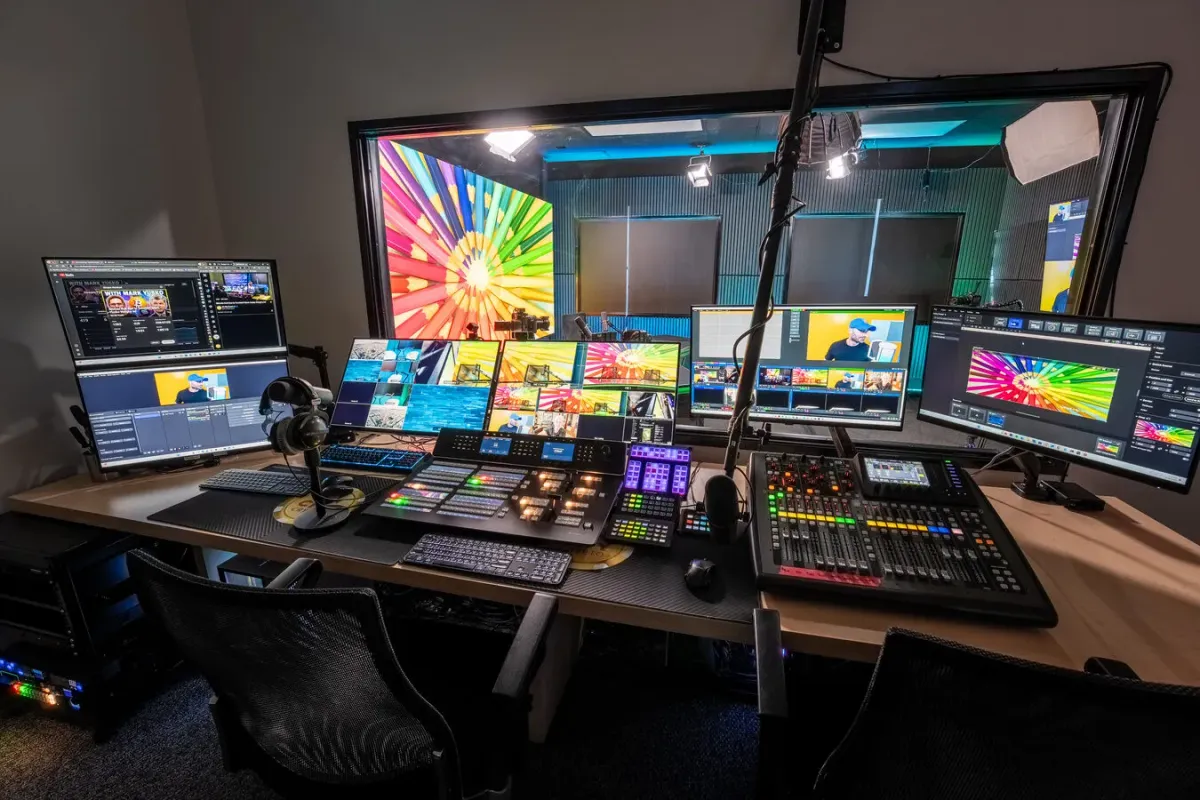
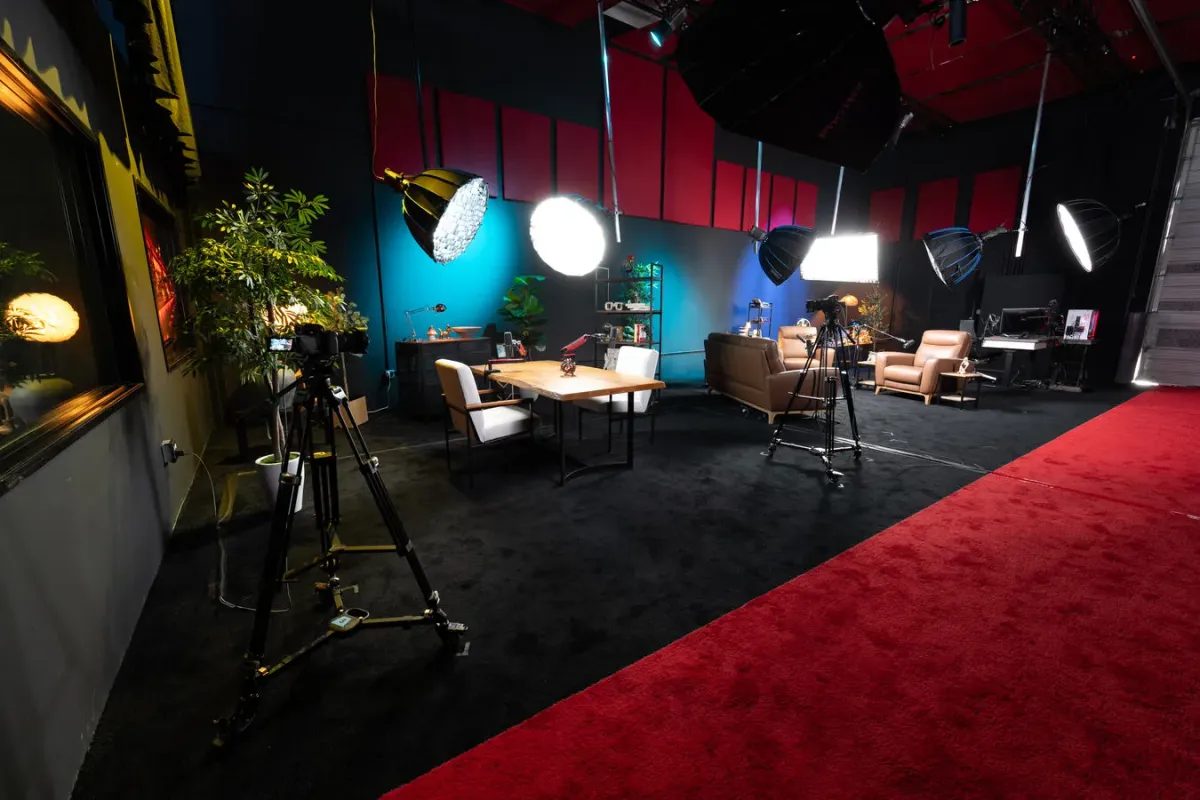
Walk into a room built for sound and the first thing you notice is what you don't hear. No AC hum, no street, no neighbor. Just your voice, clean, with none of the boxy echo you get bouncing off bedroom walls. The gear is already dialed in, the cables already run, and an engineer is setting your levels while you get comfortable. Sessions that used to eat a whole afternoon at home wrap in half the time, because you are not troubleshooting, you are just talking.
The audio quality is a real step up, not a marginal one. Treated rooms kill the background noise before it ever reaches the mic, broadcast microphones and quality preamps capture your voice with detail a USB mic can't touch, and an engineer is riding the levels the whole time so nothing clips or drifts.
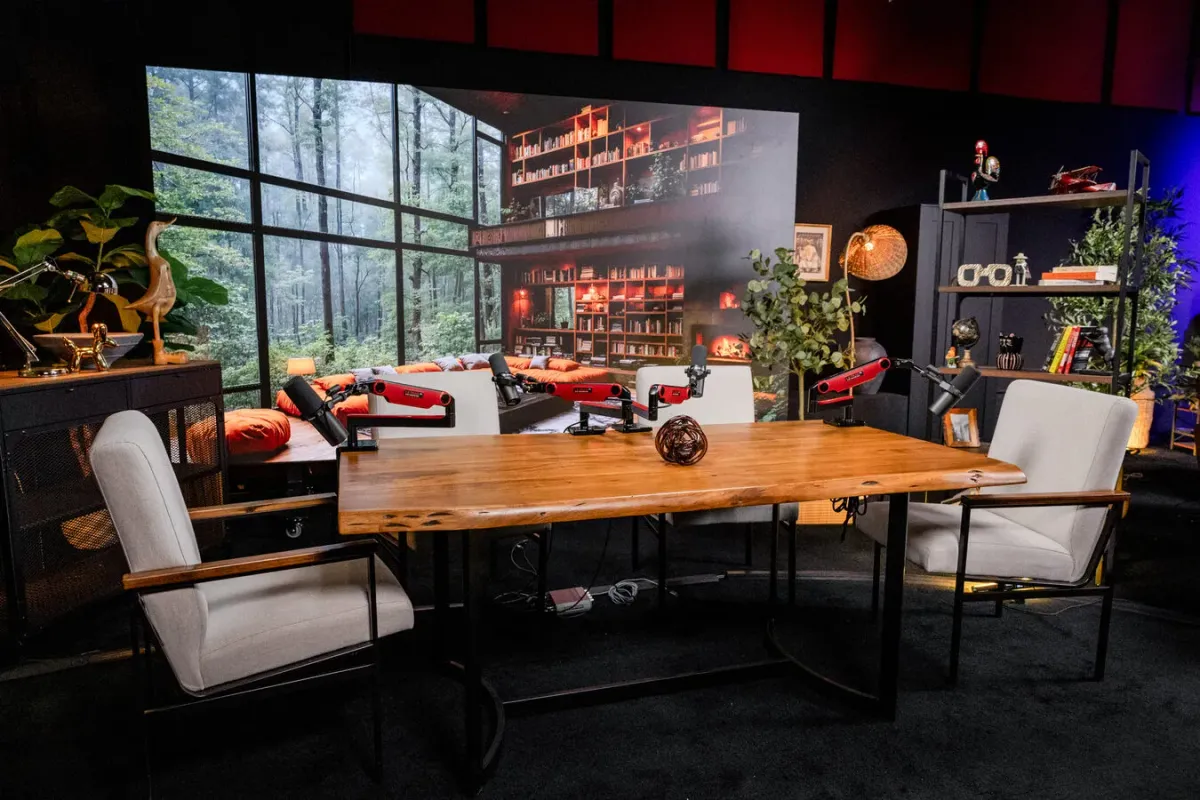
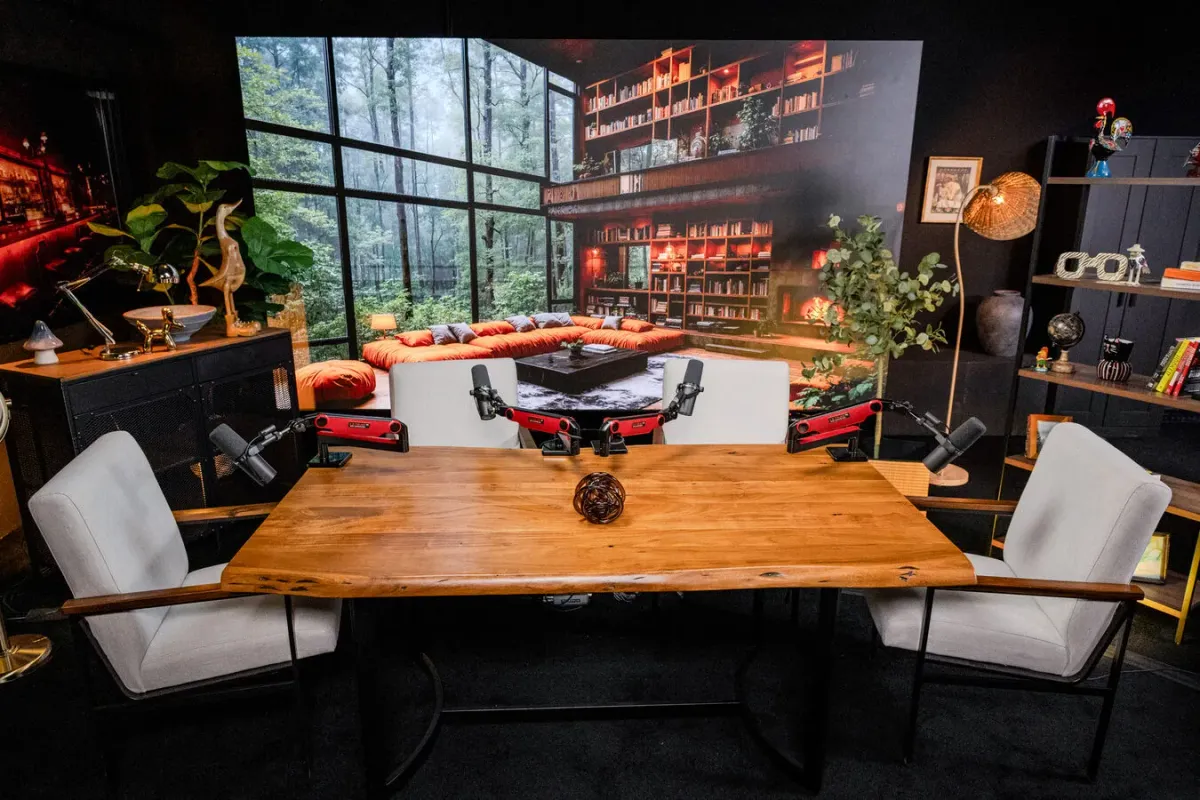
On the video side is where the gap gets widest. In our three rooms, Studio 5, The Roundtable, and The Lounge, we run multiple 4K cameras through a live switcher, so you walk out with finished, multi-angle footage instead of a pile of clips to edit yourself. Studio 5 comes standard with a 14-foot LED wall, and The Roundtable and The Lounge each offer a 12-foot version. That means your logo or a custom scene behind you in crisp detail, which is a different universe from a bedsheet backdrop lit by a desk lamp.
There is also the crew. Out front, you just talk. Behind the glass, three people are handling sound, timing, and the flow of the show, each on their own job. That is attention a solo home setup simply cannot give you, and it is the difference between a recording and a production.
And when you want to go live, our system streams your session out to YouTube, Twitch, Facebook, LinkedIn, Rumble, Spotify, and X at the same time. Pulling that off from a house means stitching together a stack of hardware and software and praying it all holds. Here it is just part of the room.
COMPARING THE REAL COSTS
This is where the math gets less obvious than it looks. Home looks cheaper on day one. Then you price out a setup that actually competes with professional quality.
A genuinely pro home rig runs somewhere between $3,000 and $8,000, and often more, once you add a broadcast XLR mic, a solid audio interface, acoustic panels, a couple of cameras with proper lighting, and a computer strong enough to edit video without choking. That is before the hours you sink into learning it all, and the monthly subscriptions for editing software, cloud storage, and streaming tools that keep billing whether you record or not.
Studio time at Sin City Podcast Studios is booked by the hour on a custom quote, and that rate already includes the mics, lighting, cameras, LED backdrops, the crew, and edited output. If you are putting out two to four episodes a month, renting often works out smarter than building and maintaining a high-end room yourself, especially once you count the hours you get back.
The thing that actually pays off in the end is retention. Cleaner sound and sharper video keep people watching, and a show that feels finished is one people come back to. Rough edges lose listeners fast, and that lost audience is the most expensive cost of all.
WHO SHOULD START WITH A HOME SETUP?
Home is the right call more often than you might expect a studio to admit.
If you are still testing the idea, record at home. When you are new, keeping it simple lets you actually start, and a quiet room plus a cheap mic is enough to find your voice, figure out your format, and see if you even enjoy doing this. There is no reason to spend on studio time to make five test episodes you might scrap.
Home also makes sense when you are producing a lot of low-stakes content. Bonus segments, quick updates, and casual solo episodes do not need the full treatment. Save your budget for the episodes that do.
WHO BENEFITS FROM A PROFESSIONAL PODCAST STUDIO IN LAS VEGAS?
A studio earns its cost in a few specific situations.
The clearest one is video. If clips and YouTube are part of your plan, and in 2026 they probably should be, then how you look is the first thing a new viewer judges. A clean, professional set does a lot of the selling before you say a word.
Guests are another. When you are bringing in a client, an executive, or anyone whose time and impression matter, the room sets the tone the second they walk in. A real studio signals that you take the show seriously, and a spare bedroom just cannot say the same thing.
And for any business, brand, or leader using a podcast to build authority and reach, professional production pays for itself quickly. That footage works on your homepage, in your ads, in a newsletter, and in a pitch. Grainy home video undercuts all of it. In a city as crowded with creators as Las Vegas, production quality is one of the clearest ways to stand out.
THE HYBRID APPROACH MOST SERIOUS LAS VEGAS PODCASTERS USE
Here is what a lot of experienced hosts actually do, and it is worth stealing: they use both.
The flagship episodes, the guest interviews, the big anniversary shows, the branded content, get recorded in a studio where quality matters most. The casual stuff, the quick solo takes, the bonus segments, gets done at home on simple gear. You are not paying for a studio every time you hit record, and you are not making your most important episodes in a noisy bedroom either. You match the room to the moment.
It keeps your budget sane while protecting quality where it counts. As a show grows and starts earning, many hosts gradually move more of their work into the studio, but the hybrid split is a smart place to live for a long time.
READY TO SEE THE DIFFERENCE IN PERSON?
The honest way to decide is to hear it for yourself. We offer free studio tours at our facility at 4005 W Reno Ave Suite F, Las Vegas, NV 89118, no cost and no pressure. Come walk through Studio 5, The Roundtable, and The Lounge, meet the people who would be running your session, and ask every question you have before committing to anything.
No strings, nothing pushed on you. We will show you what professional audio and video actually sound and look like, and you can decide for yourself whether that fits where you want to take your show.
BOOK YOUR FREE STUDIO TOUR
Come see Sin City Podcast Studios in person. Three professional studios, a full in-house crew, and everything you need to create broadcast-quality content in Las Vegas.
BOOK A FREE TOUR