We record a lot of podcasts, and we can tell within thirty seconds who wrote a word-for-word script and who did not. The word-for-word folks sound stiff, like they are reading a term paper out loud. The ones who sound alive are working from a smart outline, not a full page of text. So before we show you how to write a podcast script, here is the most useful thing in this whole guide: for most shows, you should not write a full script at all. You should write an outline that keeps you on track and script only the parts that need to be exact.
This guide covers when to fully script and when to outline, the parts every episode needs, a simple template you can copy, and the mistakes we watch trip people up in the booth.

SHOULD YOU FULLY SCRIPT OR JUST OUTLINE?
Podcast scripting lives on a spectrum. On one end is the word-for-word script where every sentence is written out. On the other is a loose bullet podcast outline with just your talking points. Neither is right for every show. The trick is matching the level of scripting to your format and your comfort on the mic.
WORD-FOR-WORD SCRIPT
Every word is written and read aloud. This works for narrative or storytelling shows, tightly produced documentary-style episodes, and anyone who needs precise legal or medical wording. The risk is obvious: read it flat and you sound like a robot. If you fully script, podcast delivery becomes the hard part, and you have to practice reading out loud until it sounds natural.
DETAILED OUTLINE
You write full sentences for the parts that must be exact, your podcast intro, key transitions, the ad read, the call to action, and use bullet points for everything in between. This is the sweet spot for most solo and co-hosted shows. You stay on track without losing the spark of real conversation.
BULLET OUTLINE
Just your main points and a few trigger words under each. This is best for interview shows and experienced hosts who can riff. Your episode script here is really a map, not a screenplay. You know where you are going, but you find the words in the moment.
The honest rule we give people: script the things that need to be exact, and outline everything else. Most new hosts over-script, and it is the single biggest reason a new show sounds lifeless.
THE PARTS OF A PODCAST SCRIPT
No matter which script format you choose, most episodes share the same building blocks. Think of these as the script segments you plug your content into every time.
- The hook: the first 10 to 20 seconds. A question, a bold statement, or a preview of the payoff. This decides whether people keep listening, so make it count.
- Podcast intro: your show name, who you are, and what this episode covers. Keep it short. Listeners came for the content, not a long welcome.
- Guest intro (if applicable): who your guest is and why they are worth hearing. Two or three sentences.
- The body: your main content, broken into two to four clear segments. This is where the outline does the heavy lifting.
- Ad or sponsor read: if you have one, write this one out word for word so the wording stays clean and honest.
- Transitions: a quick line to move between segments so the episode flows instead of lurching.
- Call to action: the one thing you want listeners to do. Follow the show, leave a review, check the link. Pick one.
- Podcast outro: a short sign-off and a tease of what is coming next episode.
You do not need every block in every episode. But knowing the full menu means you never stare at a blank page wondering what comes next.
A SIMPLE PODCAST SCRIPT TEMPLATE
Here is a script outline you can copy and reuse for almost any solo or co-hosted episode. Fill in the blanks and you have a working podcast script in about twenty minutes.
- Hook: one or two sentences, the most interesting thing in this episode.
- Intro: Welcome to [show name], the show about [topic]. I am [name]. Today we are getting into [episode topic].
- Segment 1: main point, plus your two or three bullet talking points.
- Transition: one line to bridge to the next part.
- Segment 2: main point, plus bullet talking points.
- Segment 3: main point, plus bullet talking points.
- Ad read: written word for word if you have a sponsor.
- Call to action: the one action you want listeners to take.
- Outro: Thanks for listening to [show name]. Next time we are covering [teaser]. See you then.
Notice the intro, ad read, and outro are written out, while the segments stay in bullets. That is the detailed-outline approach in action, exact where it needs to be, loose where you want energy.
MATCH THE SCRIPT TO YOUR PODCAST FORMAT
How much you script should change with the kind of show you run. Some hosts script podcast episodes down to the comma, others barely jot notes, and the right call depends heavily on your format. Here is how the three most common formats change your approach.
SOLO SHOWS
Talking alone is harder than it looks, because there is no one to bounce off. A detailed outline helps most here. Write your hook, intro, and outro in full, then use strong bullet points for the body so you do not trail off or forget your point. The danger with solo shows is rambling, and a tight script outline is your best defense against it.
INTERVIEW SHOWS
Here you script the least. Write your intro and your guest intro in full, then prepare a list of questions in a smart order, starting easy and building to the good stuff. Do not script the whole conversation, because the magic of an interview is the follow-up questions you did not plan. Your job is to listen and react, not to read.
CO-HOSTED SHOWS
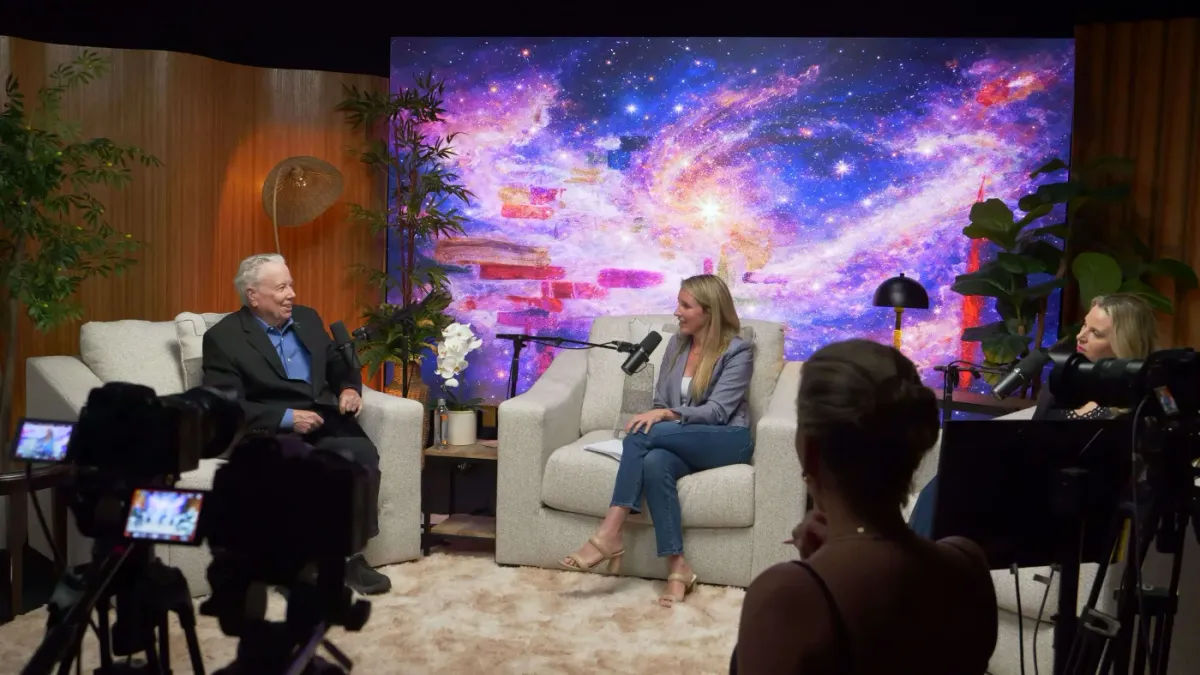
With two hosts, a loose shared outline keeps you both on the same page without killing the banter. Agree on the segments and who leads each one, then let the conversation breathe. The chemistry between hosts is the whole draw, and a heavy script strangles it. A quick pre-record chat about where you are headed often beats a written page.
HOW TO WRITE A PODCAST SCRIPT STEP BY STEP
Here is the process we would hand a first-time host.
1. NAIL THE TOPIC AND THE ONE TAKEAWAY
Before writing a single line, finish this sentence: by the end of this episode, my listener will know or be able to do X. One episode, one clear takeaway. If you cannot name it, your episode will wander and so will your script.
2. BRAIN DUMP, THEN OUTLINE THE FLOW
Dump every idea you have about the topic into a doc. Do not organize yet, just get it out. Then pull the best points and arrange them into two to four segments in an order that makes sense. This is your podcast outline, the skeleton everything else hangs on.
3. WRITE FOR THE EAR, NOT THE EYE
This is the step that separates good scripts from stiff ones. People do not talk the way they write. Use short sentences. Use contractions. Read every line out loud as you write it, and if it feels clunky in your mouth, rewrite it. For example, on paper you might write "Today we will be examining the primary factors that contribute to audience retention." Out loud, that is a mouthful. Say it the way you actually talk: "Today we are digging into what keeps people listening." Same point, half the words, sounds like a real person.
4. ADD DELIVERY NOTES
Mark up your script with little cues: pause here, slow down, get excited, ask the guest this. These notes are for you, not the listener, and they keep your energy where you want it. This matters even more when you record video, where flat delivery shows on your face too.
5. LEAVE ROOM TO RIFF
Even a detailed script should have space for you to go off-book when something interesting comes up. The best moments in podcasting are almost never the scripted ones. Your script is a safety net, not a cage.
HOW LONG SHOULD YOUR SCRIPT BE?
A useful rule: most people speak around 130 to 150 words per minute. So a fully written script for a 30 minute podcast runs roughly 4,000 to 4,500 words. That is a lot, which is another reason most hosts are better off with an outline and only scripting the parts that must be exact.
If you outline instead, aim for about one page of bullet points per 20 to 30 minutes of content. That is usually enough structure to stay on track without boxing yourself in. Match the depth of your script to how comfortable you are talking off the cuff, and trim it down as you gain reps.
COMMON SCRIPTING MISTAKES WE SEE
From the other side of the glass, the same problems come up over and over:
- Over-scripting. The number one killer of energy. If you sound like you are reading, you probably are. Cut back to an outline.
- Writing like an essay. Long, formal sentences do not work out loud. Write the way you talk.
- No hook. Starting with a slow welcome instead of a reason to keep listening. Lead with the interesting part.
- Cramming in too much. One episode, one main takeaway. A packed script feels rushed and scattered.
- Skipping the read-through. Never reading your script out loud before you record. You catch the clunky lines only when you say them.
- No room to breathe. A script so tight there is no space for a real reaction or a tangent. Leave gaps on purpose.
If you want help getting the delivery right, our guide on how to prepare for a podcast recording session covers the day-of side, and our how to start a podcast guide walks through everything that comes before you hit record.
FREQUENTLY ASKED QUESTIONS
WHAT IS A PODCAST SCRIPT EXAMPLE?
A podcast script example is a filled-in version of the template above: a written hook and intro, bulleted talking points for two to four segments, a word-for-word ad read and call to action, and a short outro. For most shows the segments stay as bullets so the delivery sounds natural rather than read.
HOW LONG IS A SCRIPT FOR A 30 MINUTE PODCAST?
A fully written, word-for-word script for a 30 minute episode runs about 4,000 to 4,500 words, based on a normal speaking pace of 130 to 150 words per minute. Most hosts do not write that much. They outline instead and only fully script the intro, ad read, and outro.
SHOULD YOU SCRIPT A PODCAST WORD FOR WORD?
Usually not. Word-for-word scripts fit narrative or highly produced shows, but for solo, co-hosted, and interview formats they tend to make hosts sound stiff. A detailed outline that scripts only the exact-wording parts gives you both structure and natural energy.
CAN CHATGPT WRITE A PODCAST SCRIPT?
An AI tool can help you outline segments and draft an intro, and it is handy for beating a blank page. But it will not sound like you out of the box. Use it for structure, then rewrite the lines in your own voice and read them aloud so they sound natural.
DO YOU NEED A SCRIPT TO RECORD A PODCAST?
No, but you need some kind of plan. Even experienced hosts work from an outline so the episode has a clear flow and does not ramble. The script or outline is what keeps a good conversation from turning into a rambling one.
WANT YOUR EPISODES TO SOUND AS GOOD AS THEY ARE PLANNED?
Book a tour of our studios and see how a professional room and setup make even a simple script land the way you intended.
BOOK YOUR FREE STUDIO TOUR