If you have thought about starting a show, you have probably run into the term podcast studio and wondered what it really means. Is it a fancy room full of gear? A booth at a library? The closet where someone records in their house? The word gets used for all of those, which is exactly why it is confusing.
Here is the thing most guides skip. When people ask what a podcast studio is, they are usually asking a second question underneath it: do I actually need one, or can I just hit record on my laptop? This post answers both. You will learn what a podcast studio is, what is inside one, the three main types, and how to tell which one fits your show.
WHAT IS A PODCAST STUDIO?
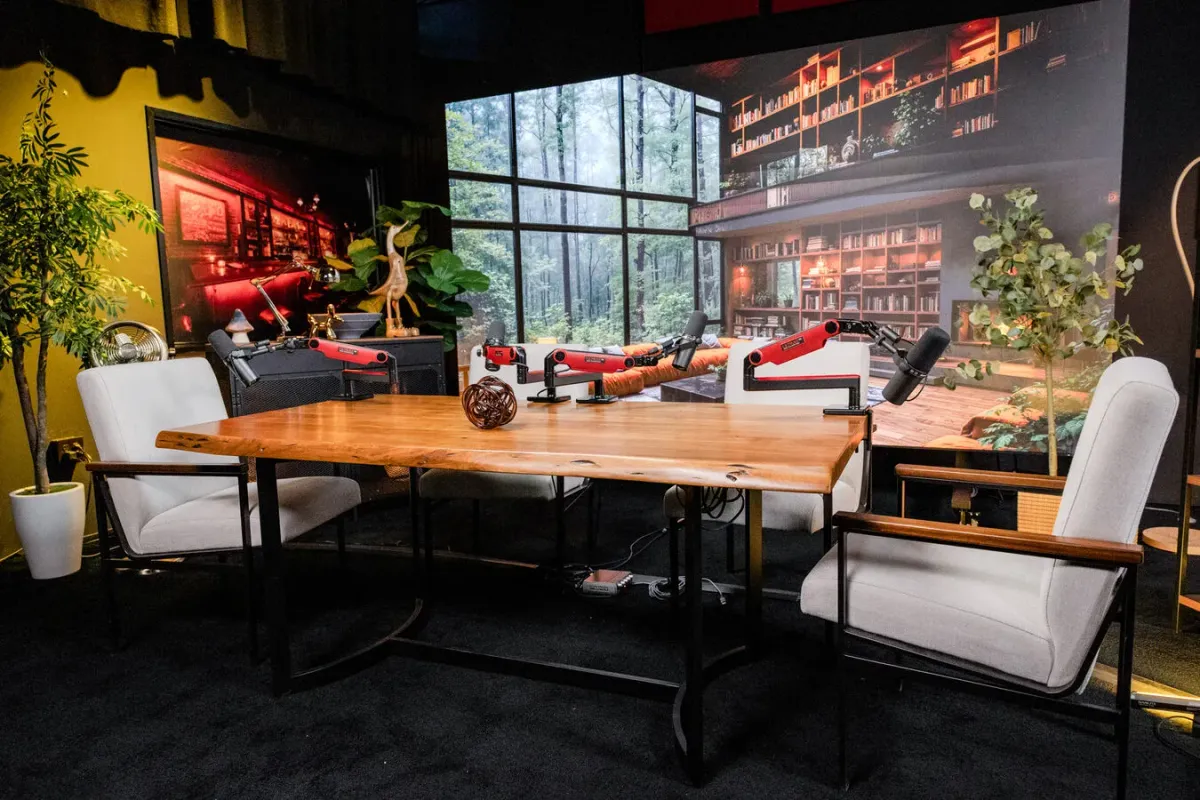
A podcast studio is a dedicated space set up to record podcast audio, and often video. It controls background noise and echo, and it holds the gear you need to capture clean sound, like microphones, headphones, and recording equipment. A studio can be a simple setup in a spare room, a room you rent by the hour, or a full service space with a crew that records everything for you.
The simple version: a podcast studio is a room built for recording, not just a room you happen to record in. The difference is on purpose. A regular room bounces sound around and picks up traffic, air vents, and footsteps. A studio is shaped and treated so your voice comes through clear, which is the one thing listeners notice first.
WHAT IS INSIDE A PODCAST STUDIO?
The exact gear changes from one studio to the next, but most include the same core pieces.
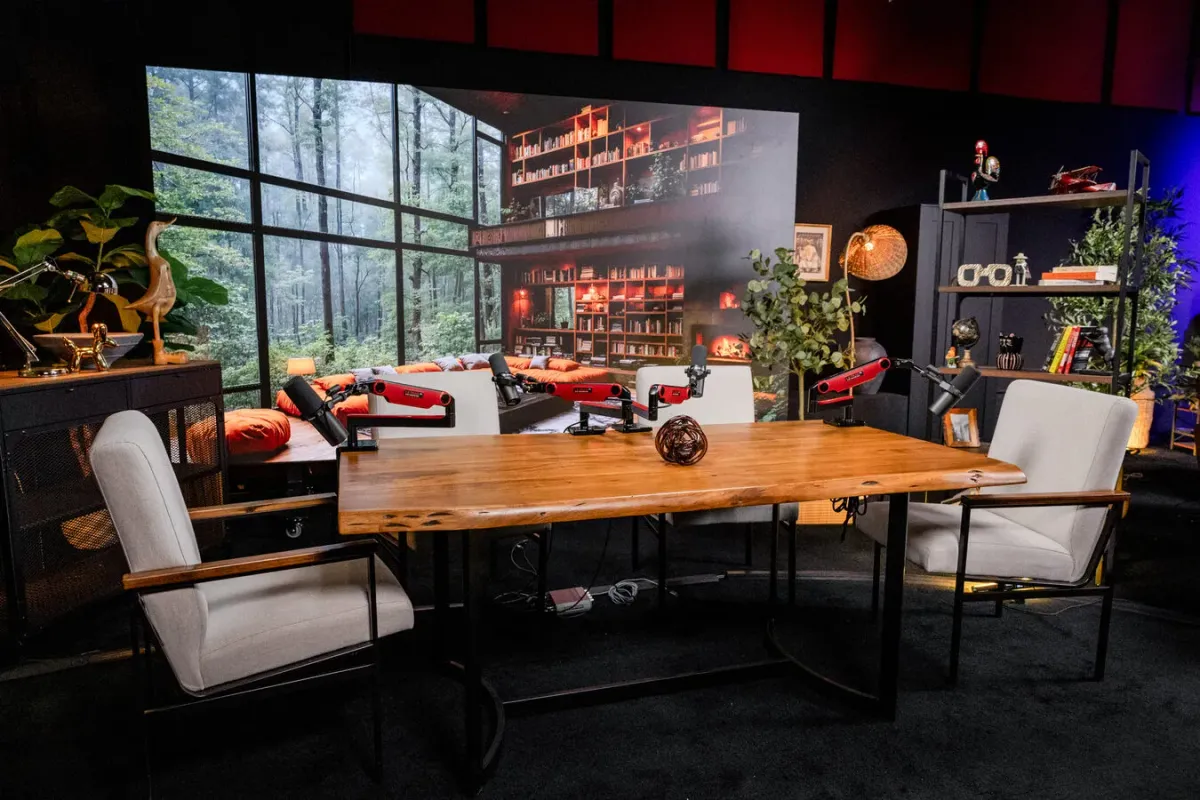
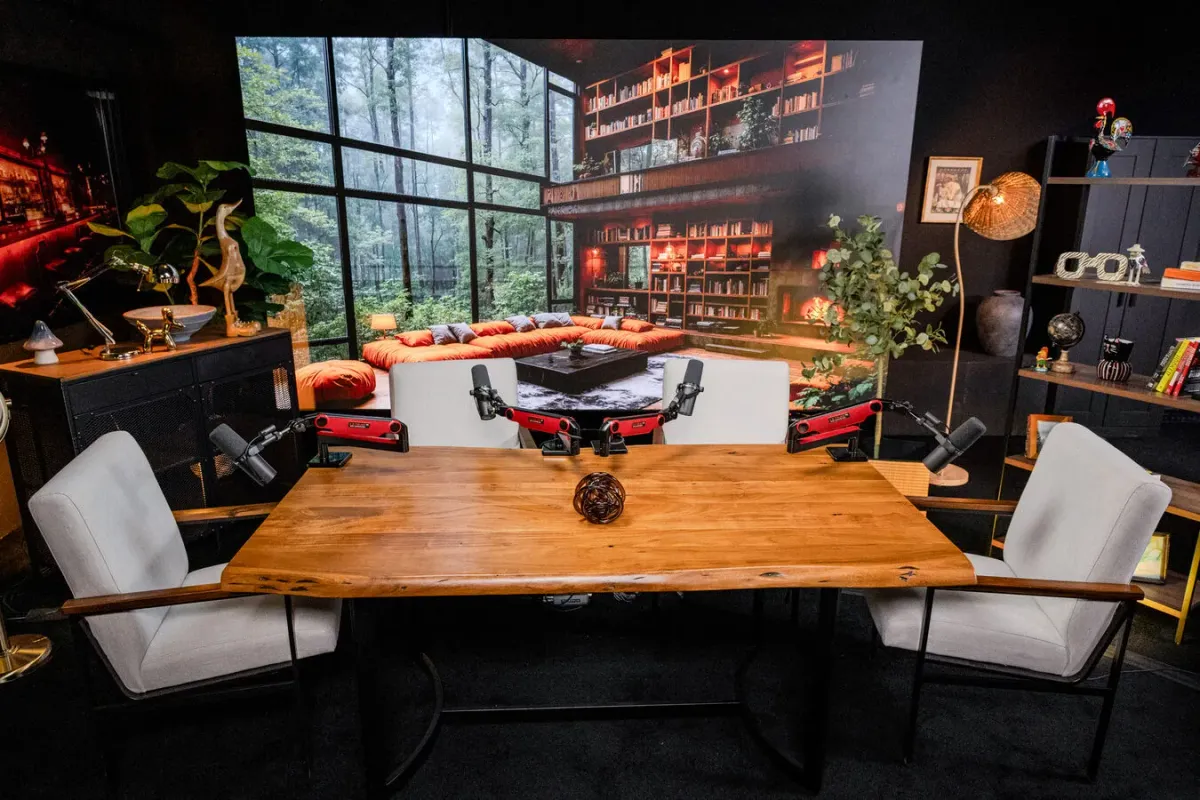
The room itself comes first, because the space matters more than people expect. A good studio uses soft materials and acoustic panels to soak up echo, so your voice sounds tight instead of hollow. Then come the microphones, usually one per person, since clean separate audio is the heart of any podcast. Headphones let everyone hear the mix while they talk and catch problems early. An audio interface or a mixer ties the mics together and sends the sound to a computer or recorder.
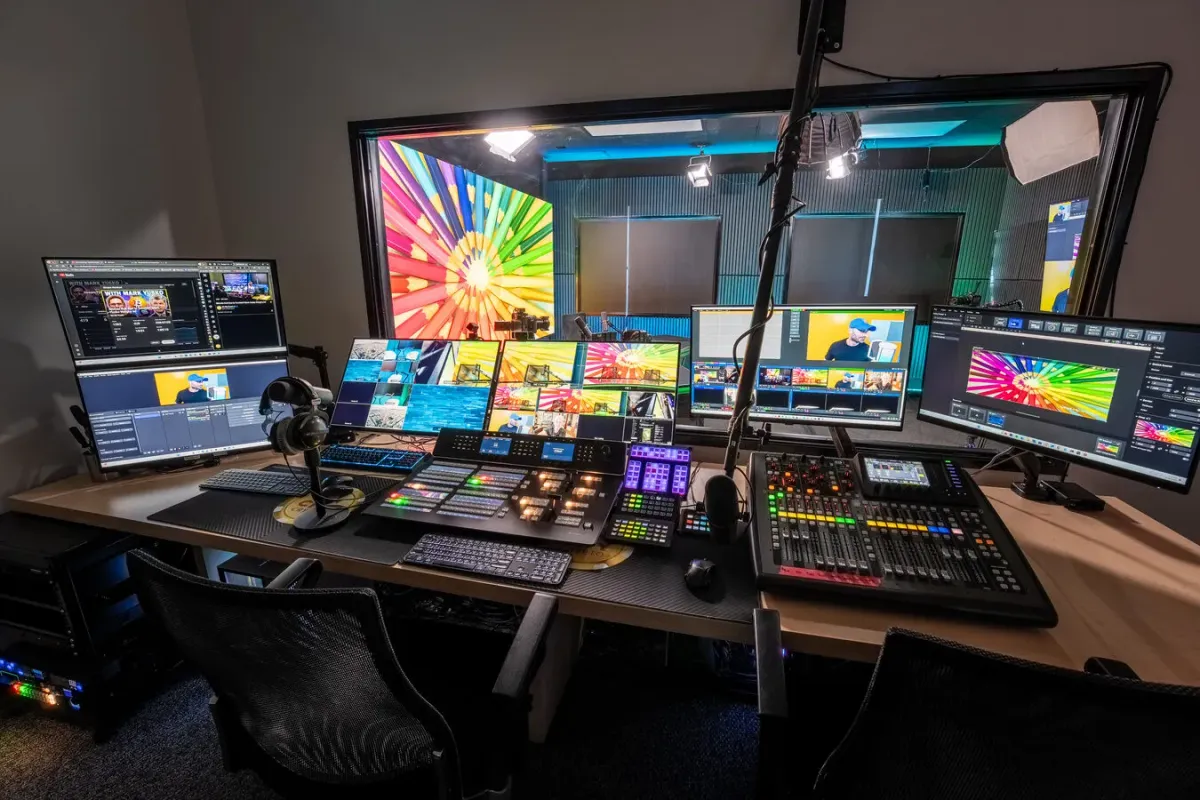
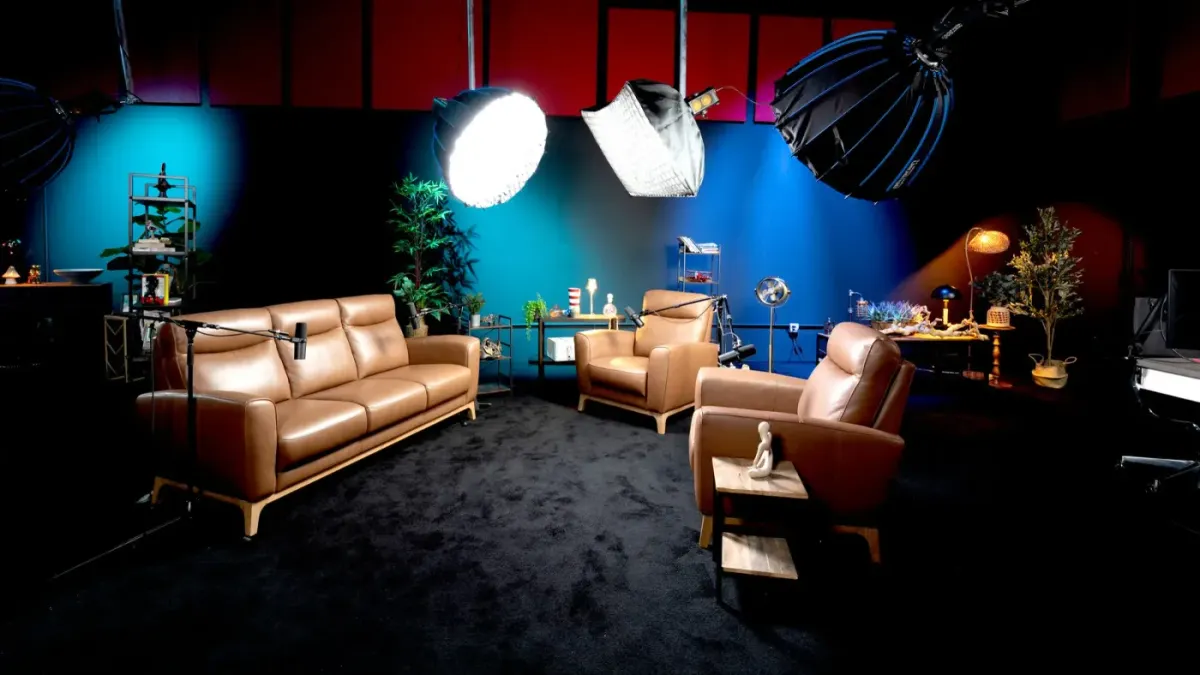
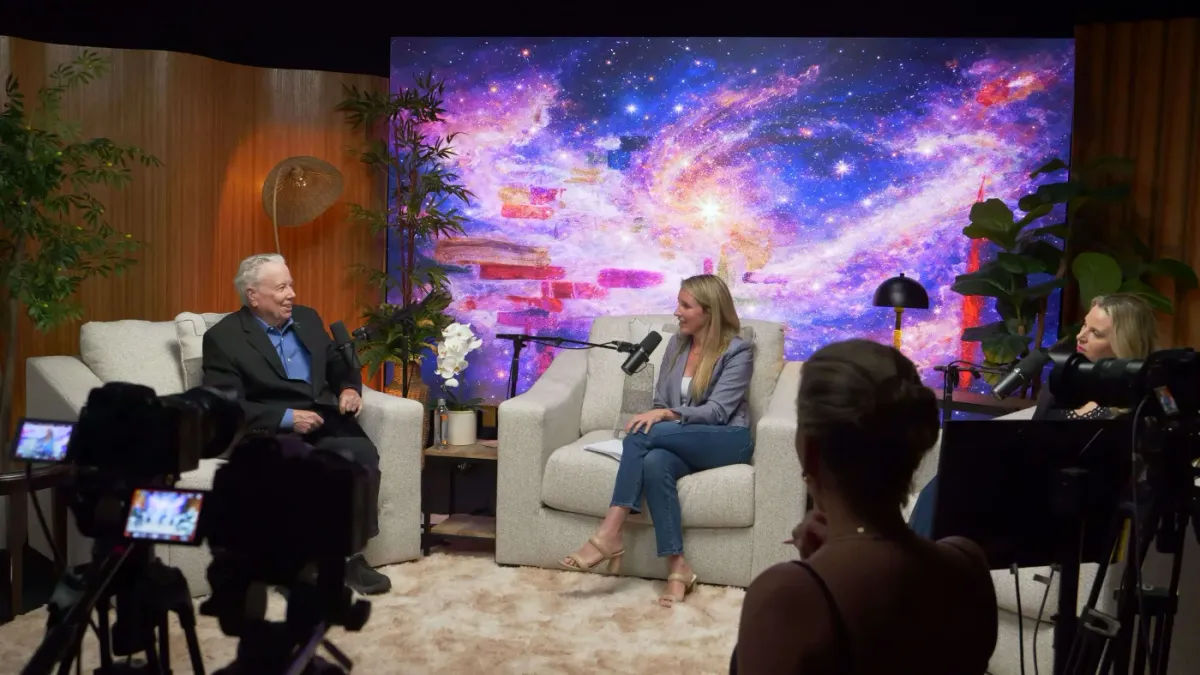
If the studio does video, and most modern ones do, you also get cameras, lighting, and a backdrop. Higher end studios run several cameras at once and switch between them, plus monitors so you can see the shot. The point of all of it is the same: capture the best possible sound and picture so you spend less time fixing things later.
THE THREE MAIN TYPES OF PODCAST STUDIO
Almost every podcast studio fits into one of three types. Knowing them makes the whole topic click.
1. THE HOME OR DIY STUDIO
This is a space you build yourself, often a spare room, an office, or even a closet packed with soft clothes that kill echo. You buy your own mic, headphones, and recording software, and you run everything yourself. It is the cheapest option over time and gives you full control. The tradeoff is that you handle the setup, the recording, the troubleshooting, and the editing, and the quality depends entirely on your gear and your skills.
2. THE RENTAL STUDIO
This is a professional room you book by the hour. It already has the mics, the treated space, and often cameras, so you do not have to own or learn the gear. You show up, record, and take your files home to edit. Rental studios are common in most cities and are a great middle ground for people who want quality without buying everything. Costs vary widely by city and setup.
3. THE FULL SERVICE STUDIO
This is the walk-in, walk-out option. The space includes the gear and a production team that runs the cameras and audio, cuts the video live, and hands you finished files. You focus on the conversation while the crew handles the technical side. It costs the most per session, but the price includes the work most people dread, which is editing and production. For busy creators and business owners, that trade is often worth it.
WHAT IS THE DIFFERENCE BETWEEN A PODCAST STUDIO AND A RECORDING STUDIO?
People mix these up all the time. A recording studio is built mainly for music, with a focus on capturing instruments and vocals and a control room for mixing. A podcast studio is built for spoken conversation, often with multiple seats facing each other, several mics, and increasingly, cameras for video.
There is overlap, and some spaces do both. But a studio built for podcasts is tuned for talking, for more than one person at a time, and for the video side of modern shows. If your plan is a conversation or an interview rather than a song, a podcast studio is the right fit.
DO YOU ACTUALLY NEED A PODCAST STUDIO?
Here is the honest answer. You do not need a professional studio to start a podcast. You can launch with a decent mic, a quiet room, and free editing software, and plenty of successful shows began exactly that way. If you are testing an idea or recording as a hobby, start simple and do not let gear stop you.
A studio earns its place once quality starts to matter for your goals. The clearest reasons to use one are sound, time, and trust. Sound, because a treated room and good mics make you sound professional in a way listeners feel even if they cannot name it. Time, because a full service studio removes the hours of editing that burn most new podcasters out. And trust, because polished audio and video make a brand or a business look serious, which matters if your show is meant to win clients or grow an audience.
So the real question is not whether studios are good. It is whether your goals have outgrown your laptop. If clean sound, finished video, and saved time would move the needle for you, a studio is worth it. If you are just starting and experimenting, the room you already have is fine for now.
HOW PODCAST STUDIOS HANDLE VIDEO
A few years ago a podcast meant audio only. Today most growing shows post to YouTube, TikTok, and Instagram, so video has become part of the job. That is why modern podcast studios are really video studios too.
A video-ready podcast studio adds cameras, lighting, and a backdrop to the audio setup. The best ones run several cameras and switch between angles while you record, so the final video looks like a real show instead of a single locked webcam. Some use LED walls, which are large screens that can display any background you want, from a city skyline to your own branding. If you plan to post clips, the video side of a studio matters as much as the audio.
HOW TO CHOOSE: HOME, RENT, OR FULL SERVICE
Start from your goals and your time. If you love the technical side, want full control, and have time to learn, a home studio is a fine place to begin. If you want professional quality without buying gear, a rental studio gives you a treated room by the hour. And if you would rather create than edit, a full service studio gets you finished audio and video with a crew doing the heavy lifting.
Budget matters too, but count your own time as part of the cost, not just the hourly rate. A cheap option that leaves you editing all weekend is not always the cheaper option. If you want to dig into real numbers, our guide on how much a podcast studio costs breaks it down, and our studio versus home recording comparison weighs the two side by side.
FREQUENTLY ASKED QUESTIONS
WHAT IS A PODCAST STUDIO IN SIMPLE TERMS?
It is a room built for recording a podcast. It controls noise and echo and holds the gear you need, like microphones and headphones, so your voice sounds clean. It can be a home setup, a room you rent, or a full service space with a crew.
WHAT DOES A PODCAST STUDIO LOOK LIKE?
Most have a table with several microphones on arms, comfortable seating, headphones, and acoustic panels on the walls to reduce echo. Video studios add cameras, lighting, and a backdrop, sometimes an LED wall that can show any background you choose.
HOW DOES A PODCAST STUDIO WORK?
You book or set up the space, the microphones capture each person on a separate track, and the audio is recorded to a computer or mixer. In a full service studio, a team runs the gear and cameras for you and delivers finished files after the session.
WHAT DO YOU NEED FOR A PODCAST STUDIO?
At a minimum you need a quiet, treated space, a good microphone for each person, headphones, and recording software. For video you also need a camera, lighting, and a backdrop. Rental and full service studios already include all of this.
WHAT IS THE DIFFERENCE BETWEEN A PODCAST STUDIO AND A RECORDING STUDIO?
A recording studio is built mainly for music. A podcast studio is built for spoken conversation, usually with several seats and microphones for more than one person, and often cameras for video. Some spaces can do both.
DO YOU NEED A STUDIO TO START A PODCAST?
No. You can start with a decent microphone, a quiet room, and free software. A studio becomes worth it when sound quality, finished video, or saved editing time start to matter for your goals.
SEE WHAT A PROFESSIONAL STUDIO LOOKS LIKE
The best way to understand a podcast studio is to stand in one. If you are in the Las Vegas area, book a free tour of Sin City Podcast Studios, see the three sets and the gear up close, and ask the team anything about recording your first episode.
SCHEDULE YOUR FREE TOUR